SOC Workflow First
Students learn how alerts move from visibility to investigation, triage, escalation, and incident notes.
Learn how analysts monitor alerts, investigate suspicious activity, understand SIEM workflow, and communicate incidents with confidence. This Hackify course is shaped around log review, threat detection basics, incident triage, and mentor-led blue-team practice.
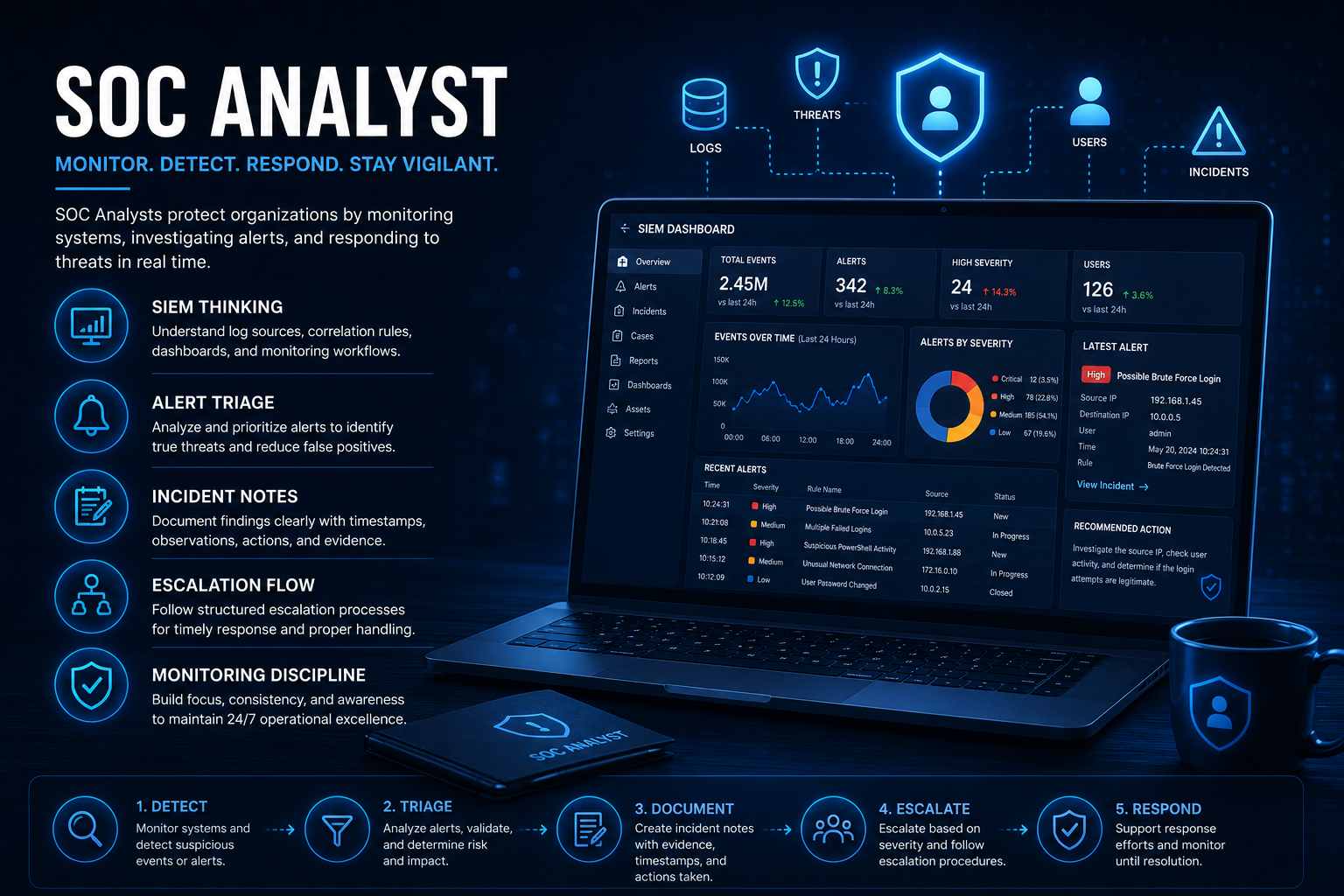
This course is built for students who want blue-team clarity, not vague cybersecurity theory. It starts with monitoring foundations and networking context, then moves into logs, detection thinking, triage discipline, escalation workflow, and practical analyst communication. The result is better confidence for SOC interviews, junior monitoring roles, and defensive-security career transitions.
Students learn how alerts move from visibility to investigation, triage, escalation, and incident notes.
The course teaches pattern recognition across security events, suspicious activity, and false-positive thinking.
Hackify emphasizes clear investigation notes, escalation language, and concise incident summaries.
The track is shaped to help students explain detection, monitoring, and response workflow professionally.
Understand blue-team fundamentals, security events, and monitoring concepts.
Review alert examples, Windows and Linux logs, and suspicious activity patterns.
Practice triage notes, incident summaries, validation logic, and escalation decisions.
Package blue-team work into interview-ready projects and stronger analyst storytelling.
Open each module to review the SOC analyst workflow, lab focus, and interview-ready outcomes step by step.
Build the base needed to understand how SOC teams monitor real environments.
Move from raw events into practical triage and validation thinking.
Connect attacker behavior to analyst action, escalation, and containment awareness.
Package investigations into clean communication and stronger role positioning.
Review simulated alerts and document first-level validation, risk, and next steps.
Analyze event patterns across endpoints and authentication activity.
Map common attacker behavior to detection logic and investigation workflow.
Write a concise report pack with findings, impact, actions taken, and escalation guidance.
Strong fit for learners targeting entry-level monitoring, alert review, and triage responsibilities.
Useful for students building event visibility and incident-handling confidence.
Good for learners who want a foundation in defensive detection and investigation workflow.
Helpful for students who want a cleaner route into broader defensive-security operations.
The alert triage exercises made SOC work much easier to understand than reading theory alone.
Ritika SharmaSOC learnerI liked that the course focused on notes, escalation, and analyst communication instead of only tools.
Karan MehtaCybersecurity fresherThe mentor support helped me connect logs, detections, and incident steps in a more professional way.
Nisha YadavBlue-team aspirantBook a short counseling session to understand course fit, project level, analyst workflow, and whether SOC is your best first move in cybersecurity.